
Major Startup Developments This Week
This week saw several key developments in the startup world, with companies making significant strides in both growth and funding. For instance, Voi, the Swedish micromobility startup, is now profitable, signaling potential for future expansion. Meanwhile, 1X, a robotics startup backed by OpenAI, has taken a step forward by acquiring Kind Humanoid, strengthening its position in the industry. In the health sector, Alan reported impressive earnings, with a clear goal of reaching profitability by 2026, while Quibim’s $50 million funding round focuses on enhancing AI-driven cancer detection. The funding trend continued as Helion raised $425 million for its fusion energy efforts, and TravelPerk doubled its valuation to $2.7 billion after securing $200 million. In the realm of quantum computing, Alice & Bob attracted $104 million to drive further innovation. Other startups, such as Motif and ElevenLabs, secured significant investments, with the latter reaching a valuation of $3.3 billion. On the flip side, while the outlook is generally positive, some experts warn that 2025 could bring more challenges, including potential closures for struggling startups.
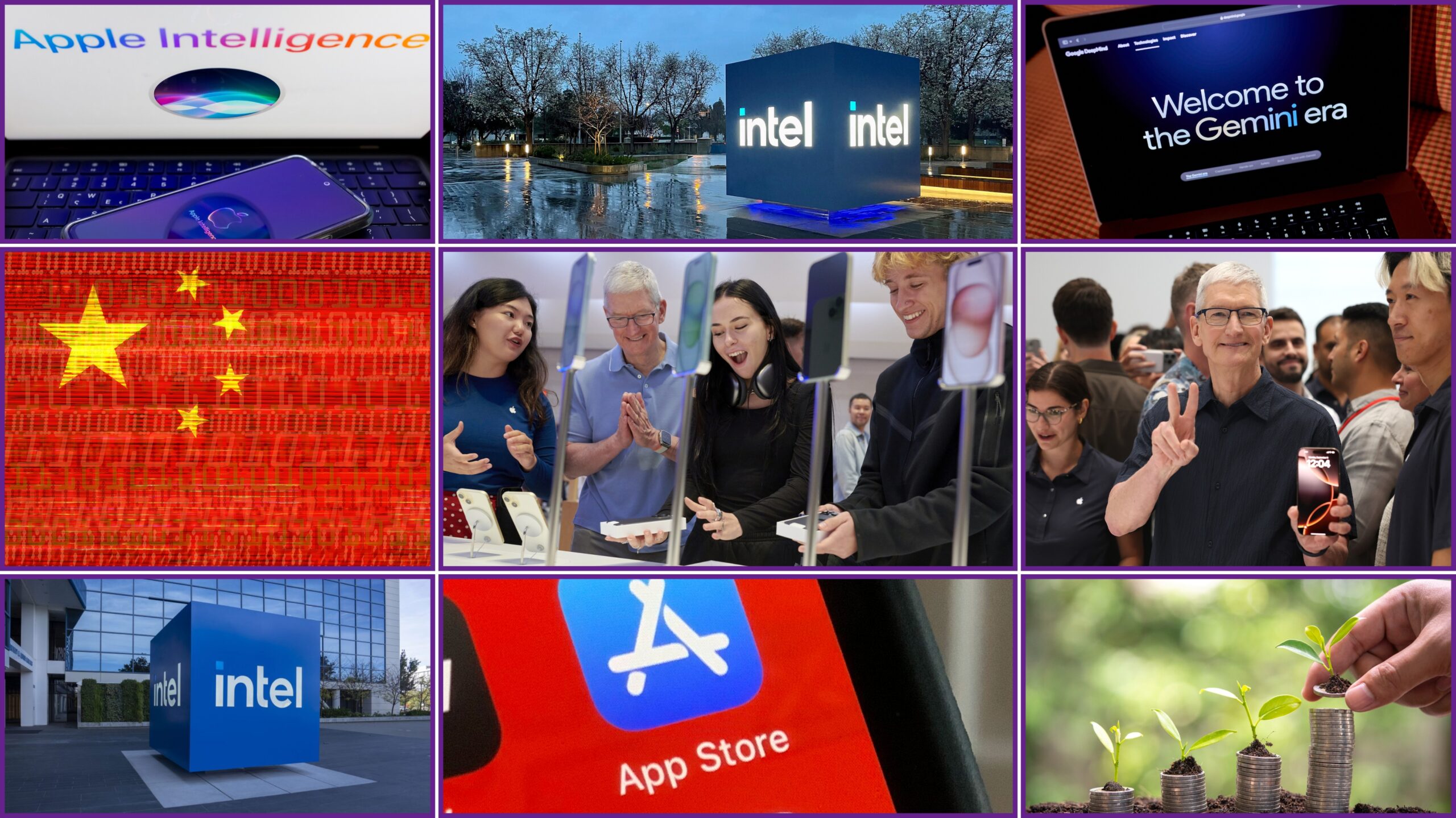
Apple Intelligence Expanding to More Languages in April
Apple is set to broaden the reach of its AI suite, Apple Intelligence, by adding support for several new languages this April. This expansion aims to cater to a wider global audience, with languages such as French, German, Italian, Portuguese, Spanish, Japanese, Korean, and Simplified Chinese being included. Additionally, English versions will be available for users in India and Singapore. The company’s decision to roll out these updates follows the initial launch, which initially only supported U.S. English, and continued with updates to cover other English-speaking regions. As part of these advancements, Apple is also introducing a new version of Siri, which will soon have the ability to understand on-screen context, further enhancing user interaction. Despite these improvements, the company has not yet announced plans to launch Apple Intelligence in the EU or Mainland China.
Intel Receives $2.2 Billion in Federal Grants for U.S. Chip Production
Intel has secured a significant sum of $2.2 billion in federal grants to support its semiconductor manufacturing efforts in the U.S. This funding, provided under the U.S. CHIPS and Science Act, aims to boost domestic chip production and innovation. The grants, distributed in two parts—$1.1 billion in late 2024 and another $1.1 billion in January 2025—will help the company advance its manufacturing and packaging capabilities across several states. The broader goal of the CHIPS Act, which has set aside $52 billion in total, is to reduce reliance on foreign-made chips and strengthen the U.S. position in the global tech industry. Despite the potential political challenges surrounding the act, Intel is optimistic about its future role in advancing U.S. technology and manufacturing leadership.
Pentagon and U.S. Military Concerned Over DeepSeek’s Security Risks
In recent days, concerns have been raised about DeepSeek, an AI chatbot that has quickly gained popularity. The app, which stores user data on servers in China and follows Chinese laws, has become a potential security threat. This has led the Pentagon to take action, as U.S. Department of Defense workers were found using the service, unknowingly connecting their work computers to Chinese servers. The app’s rapid rise in popularity has only increased concerns, prompting the U.S. Navy to implement a ban. The government is now scrambling to limit access to DeepSeek, especially as the app continues to top app stores, fueling further worry about its impact on national security.
Apple’s Services Business Thrives Amidst Challenges
Apple’s Services division has seen remarkable growth, reaching a record $26.3 billion in revenue, a 14% increase compared to last year. This surge has been driven by strong customer engagement and a growing number of subscriptions, which now total over 1 billion across various offerings. Key services like Apple Arcade and Fitness+ have played an important role in this success, along with the expansion of Tap to Pay for iPhone into 20 countries. Despite these gains, questions linger about how new regulatory changes might affect the company’s future performance in this sector. Apple recently won a significant legal case, but the company continues to face legal challenges, including new rules requiring it to allow links to external payment methods in the App Store. This evolving legal landscape will likely shape Apple’s strategies moving forward.
Apple’s AI Strategy Faces Challenges and Questions
Apple’s approach to AI innovation has been closely linked to efficiency, with Tim Cook highlighting the benefits of integrating AI to improve operations. The company continues to balance its use of hybrid AI models, relying on both custom silicon chips for simple tasks and cloud partnerships for more complex ones. However, concerns have emerged, including accusations from OpenAI that DeepSeek, an AI lab Apple is reportedly watching, might have misused its data. This raises questions about the integrity of DeepSeek’s models. While Apple’s partnership with OpenAI remains open-ended, there are hints the company may explore other AI providers in the future. Meanwhile, despite rolling out advanced AI features, Apple Intelligence hasn’t significantly boosted iPhone sales, and its AI-driven news summaries were recently paused after misleading headlines. These developments suggest that Apple’s AI ambitions face both technical and market-related hurdles.
Google Rolls Out Gemini 2.0 Pro Experimental: A Quiet Launch
In a low-key move, Google has introduced a new AI model, the Gemini 2.0 Pro Experimental, aiming to improve accuracy and boost performance in complex tasks like coding and math. This new version succeeds the previous Gemini 1.5 Pro and is now available to select users through the Google One AI Premium plan. The company has acknowledged that the model is still in its early test phase, meaning it might face some unexpected glitches. To clarify confusion, Google mentioned that an outdated release note had mistakenly been published. As part of this rollout, the Gemini 2.0 Flash model will remain the default for all users of the Gemini app. The focus of the new model is on handling challenging tasks such as programming, quantum mathematics, and advanced data analysis.
Intel Shifts Strategy in AI Data Center Market
Intel has made a significant change to its AI and high-performance computing plans, deciding to abandon its Falcon Shores GPU project. This shift comes as the company reassesses its strategy in response to ongoing challenges and increasing competition from AMD and Nvidia. The decision reflects Intel’s intention to focus its efforts on Jaguar Shores, a new project aimed at providing more complete, system-level solutions for AI data centers. While Falcon Shores will not be brought to market, it will still serve as an internal test chip to help refine the company’s technology. This pivot follows disappointing performance from Intel’s Gaudi 3 chip, which failed to meet sales expectations due to software-related issues. As a result, Intel is rethinking its approach to AI data centers, prioritizing efficiency and cost-effectiveness in its next steps.
Apple’s Strong Performance Despite Challenges
Apple’s latest earnings report showed positive results, with revenue increasing by 4% to $124.3 billion and net income rising by 7.1% to $36.33 billion. Despite facing a drop in iPhone sales, particularly in China, Apple managed to perform well due to its growth in other areas. The decline in iPhone sales can be partly attributed to the delayed rollout of its Apple Intelligence feature, which plays a significant role in the iPhone 16’s appeal. In markets where this AI feature was available, iPhone sales showed stronger results. On the other hand, revenue from Mac and iPad devices saw a boost of 15%, and services like Apple TV+ and iCloud experienced a 14% growth. With 2.35 billion active devices and 1 billion subscriptions, Apple’s overall performance remains strong, and analysts are optimistic about its future growth, despite facing a few setbacks.
