
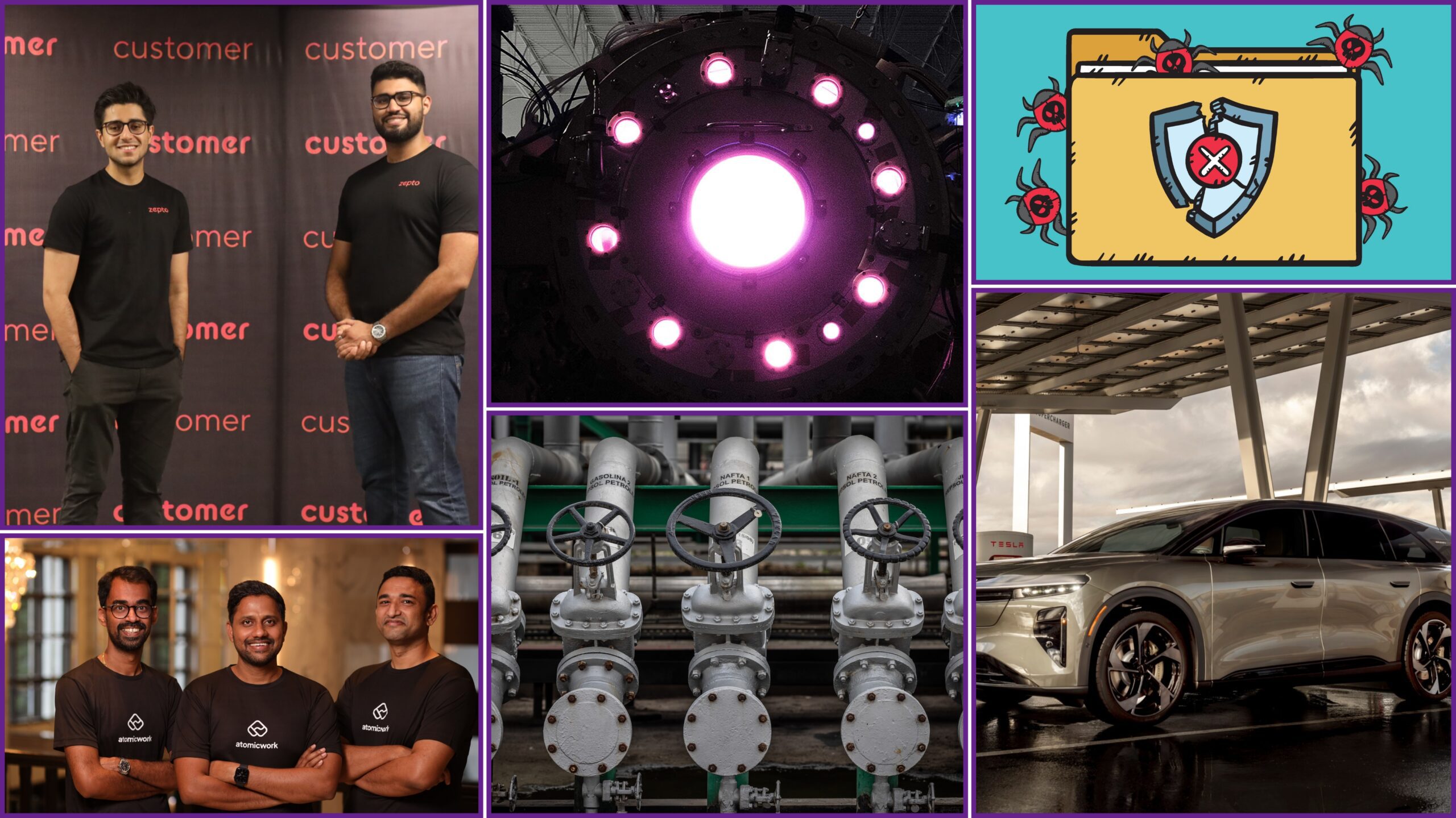
Zepto Joins the Wave of Startups Moving Back to India
What is happening? Zepto, a fast-growing quick-commerce startup, has shifted its headquarters from Singapore to India, following a trend among Indian startups preparing for public listings.
Why is this happening? Indian authorities have made it easier for startups to return home, and the country’s booming IPO market is attracting companies back. Many startups had originally registered abroad to access foreign investors or keep the option open for a U.S. listing, as seen with Flipkart, Eruditus, and Udaan.
How is it happening? Zepto, valued at $5 billion, swiftly completed its transition, making it the fastest relocation of an Indian startup’s headquarters. With a $1.1 billion IPO planned, it aims to capitalize on India’s growing stock market while competing with Blinkit in the rapid grocery delivery space.
Microsoft’s New Tool to Fight Online Scams
Online scams trick people into believing their computers are infected, often using fake security warnings. To tackle this issue, Microsoft has introduced a new feature called “Scareware Blocker.” But why is this necessary? Many users, especially older adults, fall victim to these scams, losing money or unknowingly installing harmful software. So how does this tool work? Integrated into Microsoft Edge, it uses AI to detect and stop full-screen pop-ups designed to scare users. If a suspicious page appears, the tool automatically exits full-screen mode, silences alarming sounds, and gives users the choice to close the page or continue. Microsoft ensures that all processing happens on the user’s device, keeping privacy protected. With this feature now available for testing, Microsoft is also seeking feedback to make it even better at blocking online scams.
Helion Energy’s Bold Push Towards Fusion Power
Helion Energy has raised a significant $425 million in its latest funding round, pushing its valuation to $5.245 billion. With this new capital, the company aims to take its innovative fusion power technology to the next level. By 2028, it plans to supply Microsoft with electricity through its fusion reactor, a timeline ahead of its competitors. The key to Helion’s approach lies in its unique field-reversed configuration reactor, which uses magnetic power to generate electricity, bypassing traditional steam turbines. To overcome challenges in fusion tech, CEO David Kirtley emphasizes the importance of speeding up production by bringing crucial manufacturing processes in-house. This investment will help Helion improve efficiency, speed up development of commercial power plants, and build key components faster. With backing from major investors like Sam Altman, SoftBank, and Lightspeed, Helion is positioning itself as a leader in the race for clean energy.
Atomicwork Raises $25 Million to Revolutionize Enterprise AI Solutions
Atomicwork, a fast-growing AI-driven platform, has raised $25 million in new funding, aiming to change the way large companies manage employee communications and service delivery. The startup addresses the challenge enterprises face in providing quick and easy support to employees. Traditional solutions often require complex, lengthy implementations, but Atomicwork’s modern platform offers a much quicker and more flexible approach. By leveraging advanced AI models, the platform automates tasks across HR, IT, and finance, significantly improving workflows. With a strong focus on data security, Atomicwork ensures that businesses have full control over encryption and data privacy. The funding will help the startup strengthen its research, expand its customer base, and integrate with major enterprise systems like Oracle and SAP. As it looks to scale, Atomicwork has already attracted several U.S.-based clients, including Ammex and Zuora.
ENGlobal Faces Cyberattack Impacting Sensitive Data
In November 2024, ENGlobal, a company providing engineering and automation services, experienced a cyberattack that led to the breach of sensitive personal data. Although the company hasn’t disclosed how many individuals were affected or what specific information was compromised, the breach is believed to be linked to ransomware, as some of their files were encrypted. Due to this attack, several key business systems, including financial reporting tools, were offline for six weeks. While the company claims that all operations have now been restored and its systems are secure, the identity of the attackers remains unclear, and ENGlobal continues to investigate the incident.
Lucid’s Plans for Tesla Charging Network Access and ENGlobal’s Cyberattack
Lucid Motors is making strides to expand its electric vehicle offerings, with the Gravity SUV set to use Tesla’s Supercharging network starting January 31. This move comes as Lucid introduces its second model, which is designed with Tesla’s North American Charging Standard (NACS) built-in. For owners of the Lucid Air, adapters will be available by the second quarter to connect to Tesla’s network. This shift in the industry is part of a larger trend where automakers, including Ford and Rivian, are adopting Tesla’s charging standard to improve charging access. Tesla itself is gradually opening its charging stations to non-Tesla electric vehicles. Meanwhile, Lucid is also providing solutions for those who rely on CCS charging stations, while its new 926V powertrain offers faster charging speeds of up to 400 kW. On a different note, ENGlobal recently revealed that hackers accessed sensitive personal information in a cyberattack, highlighting the growing cybersecurity risks businesses face today.
